How to Find Clients for NDIS: What Actually Works
Learn how to find clients for NDIS using trust-based websites, keyword-focused SEO, and local online visibility.
A.Singh
1/4/20263 min read


Finding NDIS clients is harder than most providers expect.
In my experience, many providers do excellent work, but families never see it. They search online first. If your website is unclear, messy, or outdated, they move on. Months of effort can go to waste if marketing is treated like optional.
Even the best support workers struggle when visibility is weak. That’s why I want to share what actually works — strategies I’ve used with providers across Melbourne, Sydney, and beyond.
Why Weak Marketing Hurts
I’ve seen providers work hard from home, supporting participants, but lose clients because their online presence doesn’t inspire trust.
Without clarity online, families don’t reach out. Even skilled, professional providers stall.
Here’s the reality: participants choose providers themselves. They compare websites, reviews, and local options. If they can’t see what you do, or if the website is confusing, they go to competitors.
1. Build a Website That Builds Trust
I always say: your website is your first impression.
It should clearly show:
Who you help
What services you offer
Where you operate
How to contact you
Avoid generic phrases like “high-quality support.” Families want simple, clear answers.
Case Study:
A provider in Sydney updated their service pages and added clear suburb info. The results in six months:
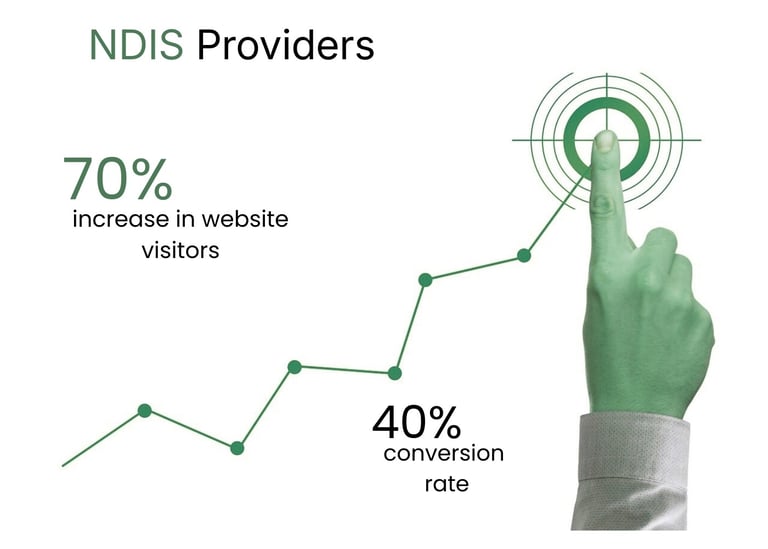
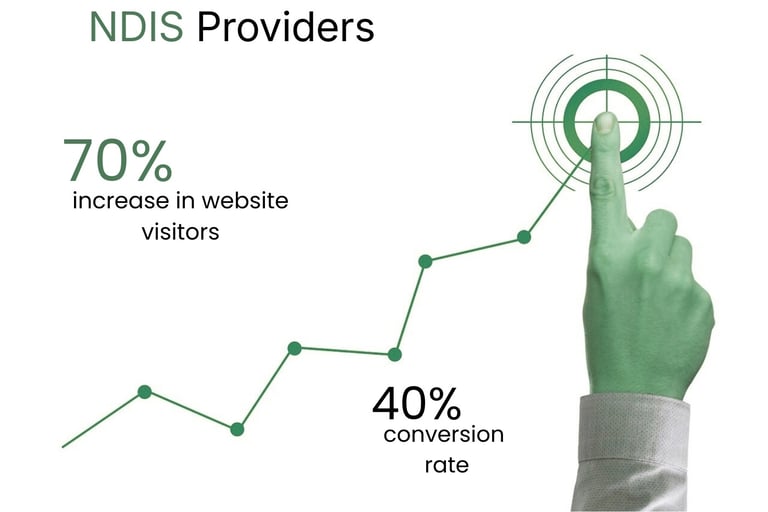
Website visitors grew 70%
Inquiries increased 65%
Even small fixes can create real results.
2. Use NDIS SEO
In my experience, SEO is the single most important step. Families search for terms like:
“NDIS provider near me”
“How to find NDIS clients”
“NDIS services in [Suburb]”
I’ve done SEO for many providers, including my own. Once the right keywords are in place, the rest falls into line.
Example:
A Melbourne provider combined NDIS SEO, local SEO, and Google Ads. In three months:
50+ qualified leads
40% of leads became clients
SEO makes families find you before competitors. That visibility matters more than any ad campaign.
3. Use Digital Marketing Services Melbourne Wisely
Digital marketing works, but only if focused. Random social posts or ads don’t produce results.
The strategies I’ve seen work best include:
Paid search ads targeting families looking for NDIS services
Blogs explaining services or answering common questions
Email follow-ups to convert inquiries
Don’t try to do everything. Focus on what drives leads, and the results follow.
4. Build Relationships With Coordinators
Support Coordinators and Local Area Coordinators still drive referrals.
From my experience, the providers who maintain strong connections see the fastest growth. I always advise:
Be professional and reliable
Make it easy to work with you
Keep in touch
Example:
One provider partnered with a single coordinator in Melbourne and added 10 participants in three months. Relationships still matter — even online, trust travels through human connections.
5. Track What Works
Many providers guess instead of measuring. That’s wasted time.
Track:
Website visitors
Contact form submissions
Leads that become clients
Double down on what works. Stop spending effort on what doesn’t. I’ve seen providers improve leads by 50% just by focusing on the top-performing marketing channels.
Quick Tips From My Experience
Keep service descriptions short and clear
Local SEO beats general marketing every time
Consistency beats sporadic effort
Clear communication builds trust
Final Thoughts
The NDIS sector will continue to grow. Like real estate, demand won’t stop. But only providers who invest in online presence, SEO, and trust-building will see consistent growth.
If you want help with NDIS SEO, SEO for NDIS providers, or digital marketing services Melbourne, I focus on clear websites, strong keywords, and generating real leads.
Helping families find the right provider should never be harder than it needs to be — and it doesn’t have to be.
Resource - NDIS: Connecting ParticipantsOk
Problem: Finding NDIS Clients Is Hard